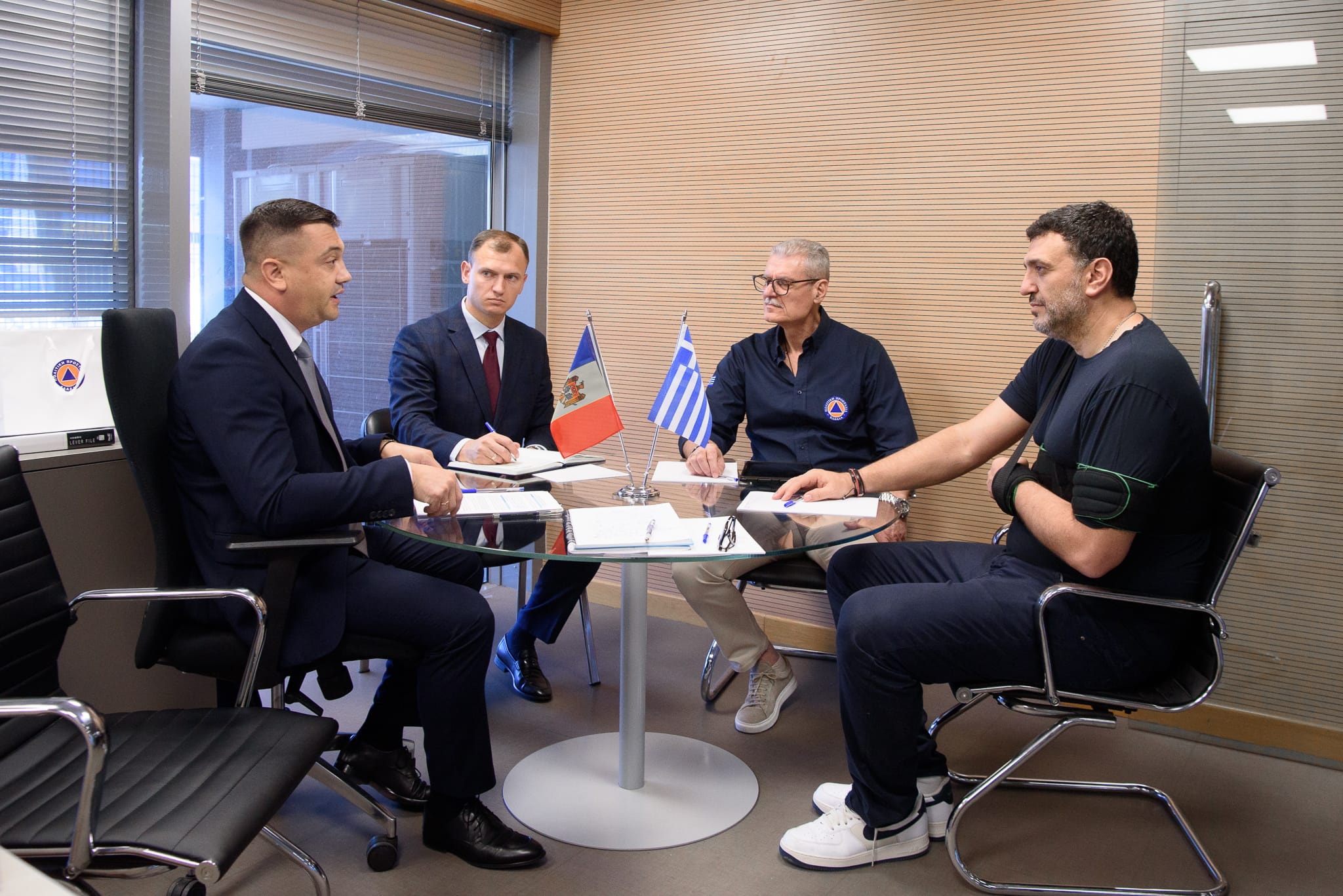
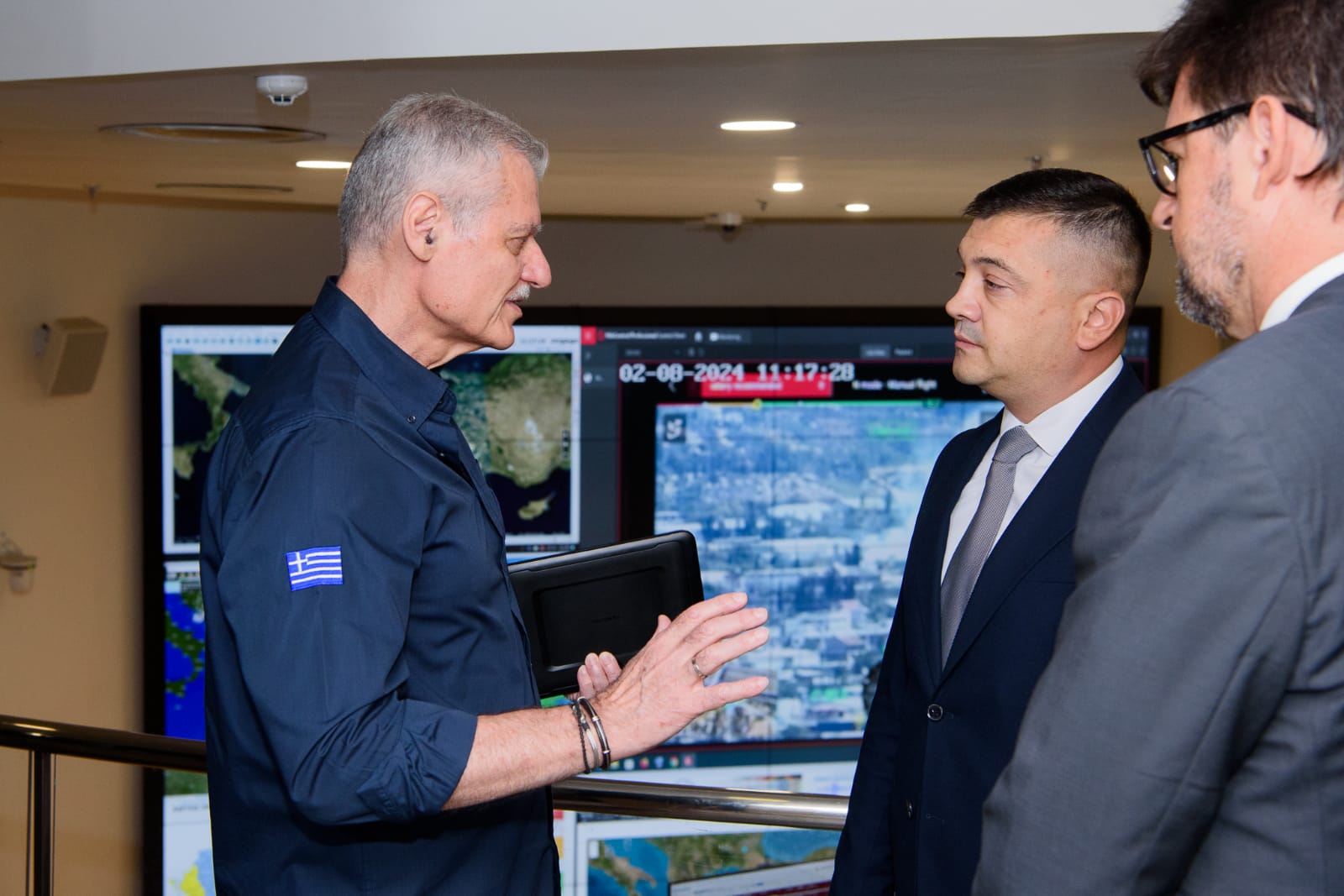
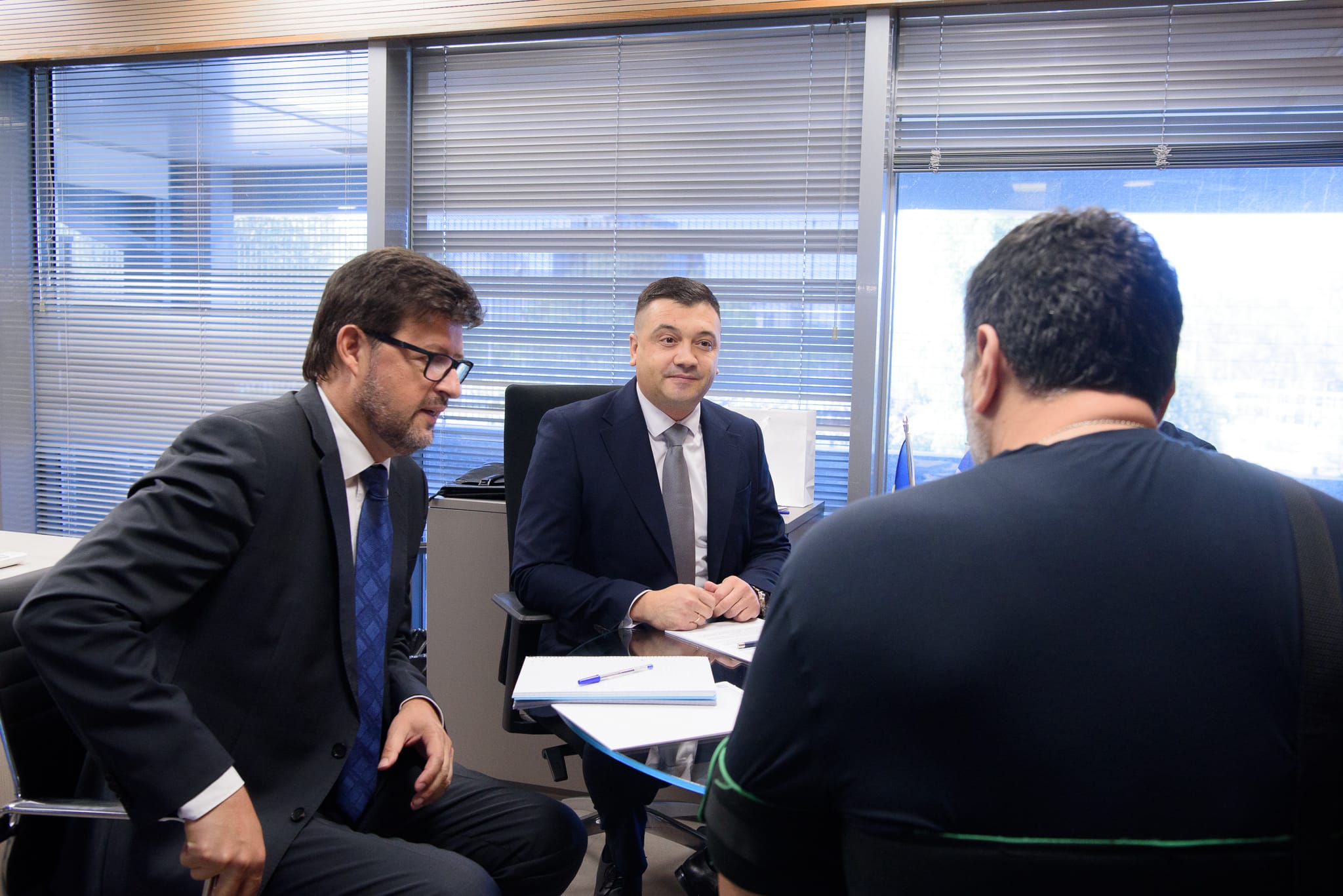
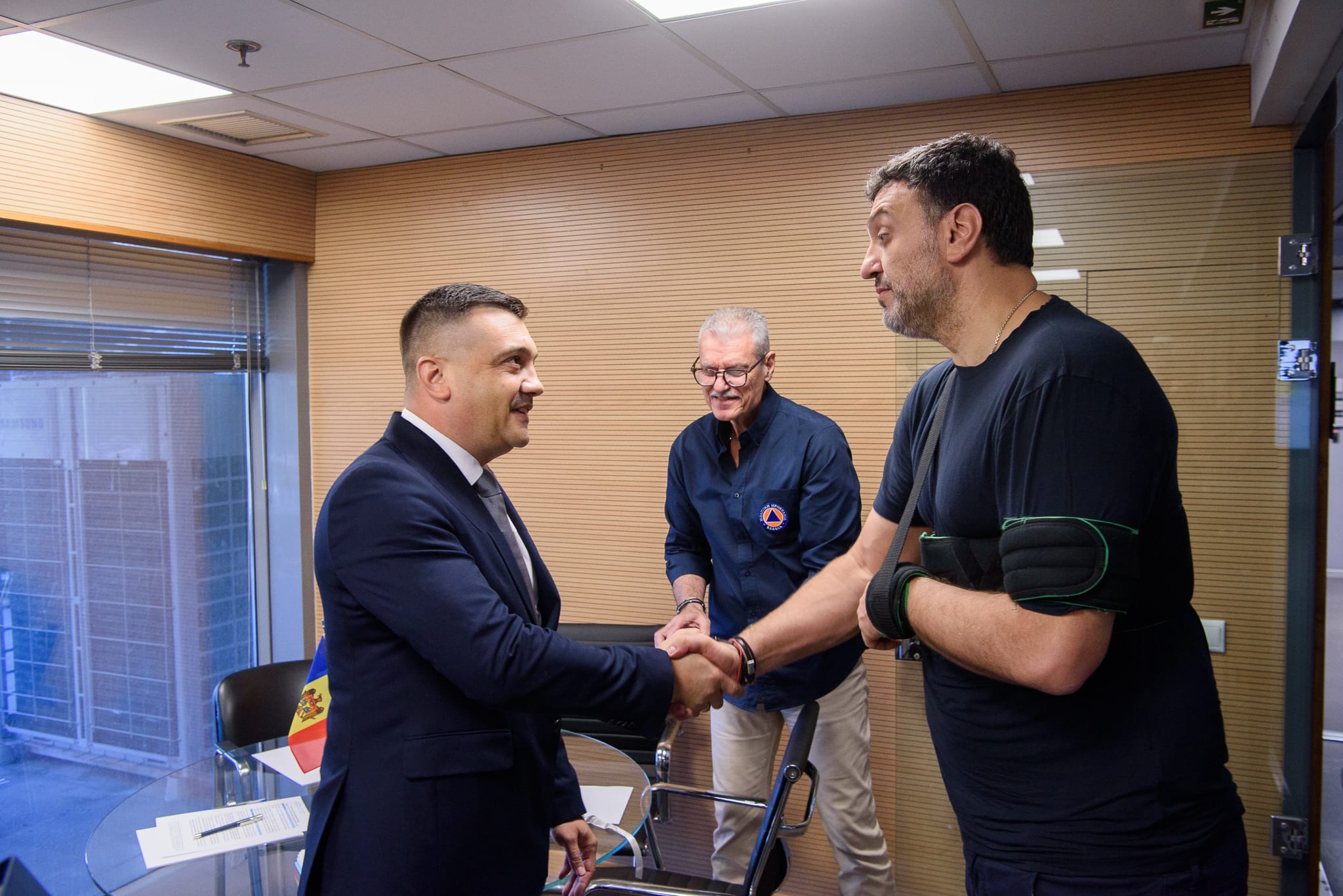
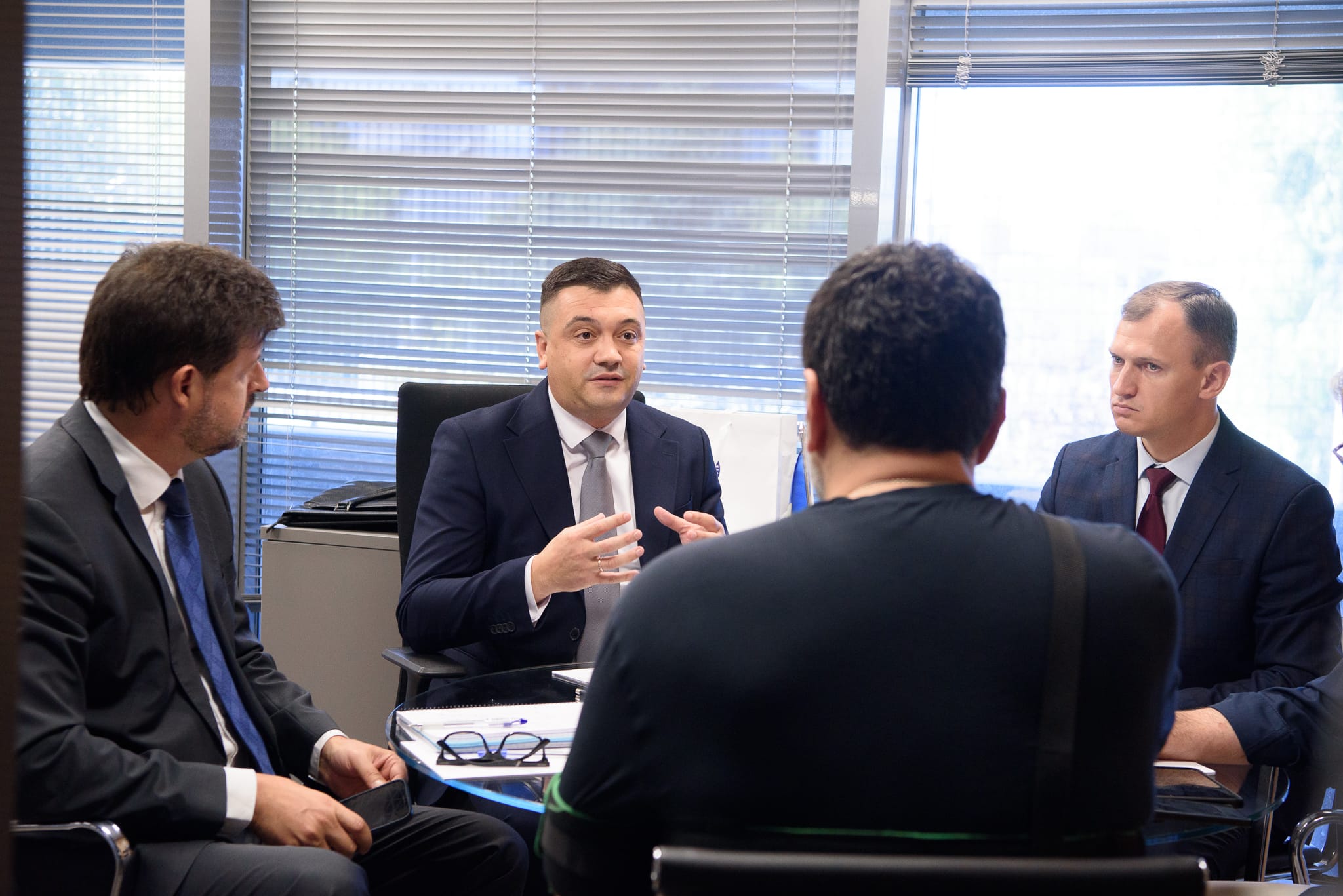
While on a working visit to Greece, Minister of Internal Affairs Adrian Efros met with Greek Minister for Climate Crisis and Civil Protection Vassilis Kikilias. The meeting followed the recent visit of the Prime Minister of the Republic of Moldova to Greece and underscored both countries’ commitment to strengthening bilateral cooperation at all levels.
Minister Efros acknowledged Greece's support for the enlargement of the European Union, a vision established at the Thessaloniki Summit in 2003, in the context of Moldova’s European aspirations.
In terms of bilateral cooperation, the official noted Moldova’s accession to the European Union Civil Protection Mechanism (CPM) in January 2024. In line with this commitment, two firefighting teams from the General Inspectorate for Emergency Situations (IGSU) have been deployed this summer to help fight the devastating fires in Greece.
Minister Efros expressed appreciation for the registration of IGSU teams to participate in MODEX exercises in Bulgaria, Latvia, Moldova, Portugal and Germany over the next two years. This participation demonstrates Moldova’s commitment to the EU Civil Protection Mechanism. For Moldovan citizens, involvement in the EU CPM translates to significantly reduced response times to emergencies, minimized material damage and the promotion of safer conditions for economic development.
During the discussion, Minister Efros highlighted the priorities and needs related to strengthening the capabilities of the Moldovan IGSU, which could be addressed through the EU CPM. These needs include support for the accreditation of the Moldovan USAR team to INSARAG standards through training, experience exchange and equipment; sharing standard operating procedures for international intervention modules, including USAR (urban search and rescue), GFFFV (ground forest fire fighting with vehicles) and HCP (high capacity water pumping); development and refining of regulations and procedures for the organization and execution of module activities, including on-the-job training, mobilization during exercises and emergencies, certification procedures; implementation of a national early warning system; exchange of best practices for emergency prevention; improvement of institutional expertise in disaster prevention.
The meeting concluded with both ministers reaffirming their commitment to strengthening bilateral ties and enhancing cooperation in civil protection and emergency response.






.png)